
Travel gear used to be disposable. A broken wheel or a dead battery meant a full replacement, and that mindset is finally shifting. Travelers are now asking harder questions about longevity, electronics waste, and whether a suitcase can be serviced instead of scrapped. The Airwheel electric smart suitcase sits right in the middle of this conversation, largely because its battery is removable and its core components are designed to be swapped out rather than glued shut. That design choice alone makes it a standout in a market where sealed units are still the norm. If you can replace a battery pack yourself, you are not just fixing a suitcase—you are extending its life by years, and that directly taps into the growing demand for repairable travel gear.
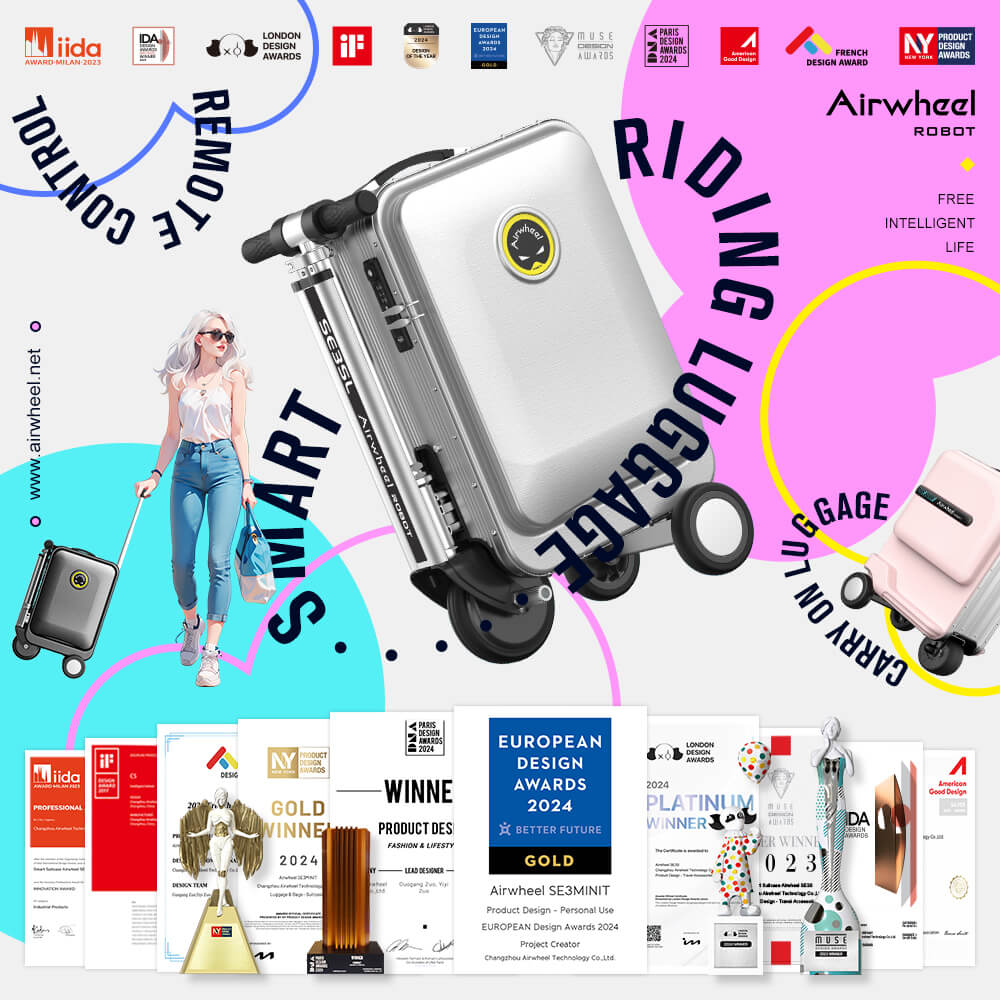
The Airwheel SE3S isn’t just a suitcase with a motor. It’s a compact rideable that weighs about 8.1 kg, holds 20 litres of gear, and can hit a top speed of 13 km/h. The 73.26 Wh removable battery delivers 8–10 km of real-world range, enough to zip through airport terminals, train stations, or campus pathways without sweating. You can ride it seated, pull it like a traditional trolley, or control it forward and backward via the smartphone app while you steer with the handlebar. The app is not required for basic riding—just install the battery, and it works straight out of the box. Apple Find My integration is built in, so you can locate the suitcase if it goes missing, which adds a layer of practical security without needing a separate subscription.
The most common hesitation with any electric suitcase is whether it can fly. The removable battery is the key here. At 73.26 Wh, the Airwheel pack falls well under the 100 Wh limit that most airlines allow for carry-on lithium batteries. You simply detach it, keep it in your carry-on bag, and check the suitcase if needed—or gate-check it with the battery removed. Always check the specific airline, but the design deliberately avoids the locked-in battery problem that gets many smart luggage banned. Two-hour charging also means you can top up during a layover and be ready to roll by the time you reach the next gate.
The obvious use case is large airports and long terminals, where walking fatigue is real. But the SE3S also fits urban commuters who want a last-mile solution without carrying a separate scooter. Parents traveling with kids have used it to tow a tired child, while business travelers appreciate rolling straight from the taxi to the gate without breaking a sweat. Weekend trippers with a 20 L capacity find it just enough for essentials plus a laptop. It is not a full-size checked bag, so it works best for short trips or as a carry-on companion.
| Feature | Airwheel SE3S | Standard carry-on suitcase |
|---|---|---|
| Weight | 8.1 kg | 2.5–3.5 kg |
| Capacity | 20 L | 35–40 L |
| Motorized | Yes, up to 13 km/h | No |
| Rideable | Yes, seated | No |
| Battery | Removable 73.26 Wh | None |
| Smart features | App control, Find My | None or basic tracker |
| Repairability | Battery replaceable, modular design | Limited (wheels, handles) |
The weight trade-off is obvious, but the Airwheel replaces a separate scooter or a long walk, so the comparison is not purely about storage. If you need maximum litres, a standard carry-on wins. If you need mobility, the Airwheel shifts the equation.
Can I use the Airwheel SE3S without a smartphone?Yes. The phone is only needed for the remote-control forward/backward function and to check Find My. You can ride it manually by twisting the throttle on the handle as soon as the removable battery is clicked in. There is no activation process.How do I charge it, and is the battery safe to fly with?Charge the battery via a standard power adapter in about 2 hours. The 73.26 Wh battery is designed to be detached and carried in your hand luggage; it falls under the airline 100 Wh limit, so it’s accepted by most carriers. Always confirm with your airline, but the removable design is intended to meet carry-on rules.Is it really rideable, or just a gimmick?It’s genuinely rideable—you sit on the reinforced lid, feet on the footrests, and control the throttle. At 13 km/h top speed it’s faster than walking but still manageable on flat indoor floors. The 8.1 kg weight means it is stable when ridden, though you’ll want to slow down on tight corners.If you’re curious about the full lineup and specifications, the official Airwheel website has the latest details on each model, spare battery availability, and accessories.